


Why Your Solar Inverter Is Not Saving Electricity Bills
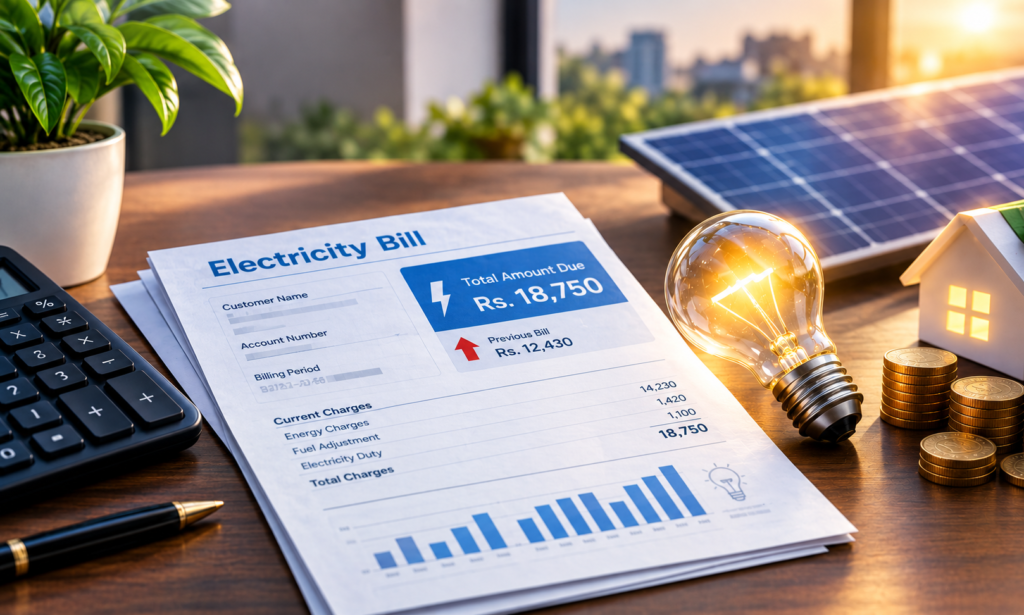
You Installed a solar system to save money on electricity,but after installation of heavy solar system if you are still paying high electricity bills .This is the common issues in Pakistan and many people are facing to this after going with solar .The issues is not solar performance it must be some technical issues or in usage that can be identified and corrected .
1. Wrong System Sizing
Most of the people when they want to buy solar setup they are not going with proper calculation which completely fulfil their daily home use electricity consumption they manage and choose according to their budget .
And yes it is true many installer size a system based on budget rather than your real consumption.A system that’s too small only covers a fraction of your load, so your bill reduction is minimal.
Solution: Check your last 12 months of electricity bills, calculate your average daily unit consumption, and get a system sized to cover most of your actual usage, not just what fits your budget.
2. Using Appliances at the Wrong Time
Solar panels can only produce power in the daytime. If the inverter is not connected to a battery-backed system, any energy requirement at night is met by the grid.
- Washing machines, motors, or irons used at night don’t help with solar.
- Many homes continue to use their lights as they had during the day, unaware that using lights at night saves money.
Solution: Shift heavy electricity usage, laundry, ironing, water pumping, and charging to daylight hours between 10 AM and 4 PM when solar generation is at its peak.
3. Net Metering Not Set Up Properly
Net metering allows excess solar electricity to be sent back to the grid in exchange for bill credits. If this isn’t configured correctly, you lose out on that benefit.
- Some systems are installed without applying for a net meter with the local DISCO (such as LESCO, FESCO, IESCO, K-Electric, etc.).
- Without net metering, any extra electricity your panels generate is simply wasted.
- Delays or errors in DISCO paperwork can also mean months of lost credit.
Solution: Confirm with your installer that net metering has been applied for and approved. Check your bill to see if it reflects “units exported”; if not, follow up with your DISCO immediately.
4. Inverter Not Matched With Panel Capacity
There is a possibility that the capacity of the inverter and solar panel does not match optimally, and thus the system does not function efficiently.
If the inverter output is lower than the panel’s output, then it will not be able to handle the entire power production of your panels, which will result in wasted energy.
When a load is applied, an oversized inverter operates at low loads and consumes the standby power unnecessarily.
Solution: Make sure your inverter’s rated capacity is properly matched to your panel wattage, ideally with a small buffer (10–20%) for efficiency, not a mismatch of two or three times.
5. Dust, Shading, and Poor Maintenance
Solar panels lose a significant amount of efficiency due to dust, bird droppings, or shading, a very common issue in Pakistan’s dusty climate.
- Dusty panels may reduce generation capacity by 15 to 30%.
- If nearby trees, walls, or water tanks cast shadows at certain times of day, the output will be reduced.
- Loose wiring and connections can also lead to power loss over time.
Solution: Clean your panels at least once every 1–2 weeks, especially during dry and dusty months. Trim any trees or remove obstructions causing shade, and get your system inspected every few months.
6. Voltage Fluctuations and Faulty Wiring
Poor-quality wiring, loose connections, or unstable voltage can silently reduce your system’s performance without any visible warning signs.
- Thin or low-quality cables cause voltage drop, especially over longer distances.
- Loose MC4 connectors or DB box wiring can lead to power leakage.
Solution: Use the proper gauge wiring recommended for your system size, and have a qualified technician periodically check all connections.
7. Ignoring the Inverter's Battery Health
In systems that include batteries, if a battery is weak or old, it may be operating without providing any backup power, leaving the grid as the only available source.
- Batteries degrade with use, particularly with substandard charging cycles.
- Overcharging or deep discharging a battery will significantly reduce its life.
Solution: Monitor battery health regularly and avoid repeatedly letting batteries fully discharge or overcharge.
Concluion
A solar inverter alone doesn’t guarantee lower electricity bills the real savings come from correct sizing, smart usage habits, proper net metering, regular maintenance, and quality installation. If your bills haven’t dropped as expected, go through each of these points systematically. In most cases, the issue isn’t the solar technology itself, but how the system was installed, configured, or maintained.
With a few adjustments, most households can significantly improve their solar savings and get the real value out of their investment.