


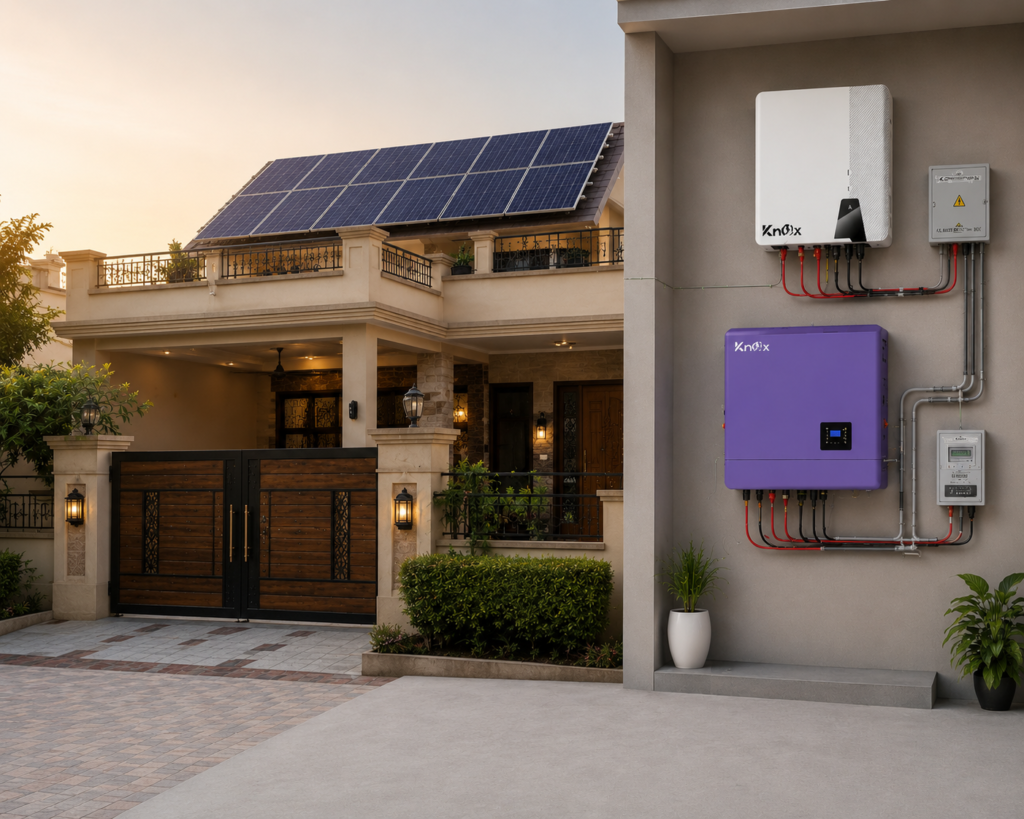
Why Earthing Is Your Inverter’s First Line of Defense
When people think about inverter safety, their minds usually go straight to batteries, wiring, or the load capacity. Earthing rarely gets a mention, yet it quietly does one of the most important jobs in the entire system. It doesn’t make noise, it doesn’t flash a warning light, and most of the time you won’t even notice it’s there until the day something goes wrong and it saves your life or your equipment. That’s exactly why earthing deserves to be called the silent protection of an inverter.
What Earthing Actually Does
In an emergency, earthing serves as the first line of defense. This is actually what happens: electrical current flows into the ground whenever there is a fault, leakage, or short circuit. Every inverter, no matter how good the brand or how expensive the model, carries some risk of internal faults over time. Wires age, insulation wears down, and moisture can creep into places it shouldn’t. When any of this happens, stray current can flow through the metal body of the inverter or connected appliances.
Without proper earthing, that stray current has nowhere to go except through whatever or whoever next touches the equipment. With earthing in place, the current finds an easier, safer route straight into the earth, away from people and sensitive components.
Why It’s Called “Silent” Protection
Earthing does nothing under normal operating conditions. Your inverter will charge, switch, and supply power exactly the same whether or not it’s properly earthed, at least on the surface. That’s the tricky part. A poorly earthed or completely unearthed inverter can work perfectly fine for months, giving false confidence that everything is safe.
The real test will be during a fault. That is where a correctly earthed system will slyly send the dangerous current elsewhere, and not even the user will realize that something went wrong. This contrasts with an unearthed system, in which the same fault could result in an electric shock, appliance damage, or even a fire. It is only when life goes wrong that its protection becomes apparent, which is why many people do not value it in good times.
The Real Risks of Skipping Earthing
Skipping earthing to save time or installation costs is one of the most common mistakes people make, especially in home setups. Some of the consequences include:
- Electric shocks: If the inverter’s metal casing becomes live due to internal leakage, anyone touching it without an earth connection could receive a serious shock.
- Damage to sensitive electronics: Voltage fluctuations and fault currents can damage the inverter’s internal circuitry, and the damage can spread to connected devices such as fans, lights, and chargers.
- Fire hazards: Uncontrolled fault currents generate heat, which, in worst-case scenarios, can lead to short circuits and fires.
- Reduced equipment lifespan: Even minor, repeated leakage currents that aren’t properly discharged can slowly degrade components inside the inverter.
None of these risks are visible day-to-day, which is exactly why earthing is so easy to overlook until it’s too late.
Getting Earthing Right
Proper earthing isn’t complicated, but it does require proper technique. A few practical points worth keeping in mind:
- Use a dedicated earth electrode or rod, buried deep enough to maintain good contact with moist soil, since dry soil offers poor conductivity.
- Keep earth resistance low. Most electricians aim for a value low enough to ensure fault current can flow away quickly rather than building up.
- Inspect earthing periodically. Earth rods and connections can corrode over time, especially in humid or coastal areas, silently weakening the protection they’re supposed to offer.
- Never rely on water pipes or random metal structures as a substitute for a proper earth connection. This was common practice years ago, but it’s unreliable and unsafe by modern standards.
- Match earthing to your inverter’s capacity. Larger inverter and battery setups may need earthing systems designed for higher fault currents.
A Small Step With a Big Payoff
Configuring the earth might not be the most thrilling aspect of inverter installation, and it’s not surprising that it is sometimes overlooked as a last step. It offers no distinguishing characteristics, performance improvements, or an obvious daily reminder that you are using it. Which is precisely the point of being invisible, of course. Good earthing is a form of protection that requires little in return and only needs to be installed properly and tested from time to time.
The next time you set up an inverter, or if you already have one running at home or at work, it’s worth taking a moment to check the earthing. It’s a small step, but it stands between routine operation and a genuinely dangerous situation. Silence doesn’t mean it’s unimportant; in the case of earthing, silence means it’s doing exactly what it’s supposed to do.