


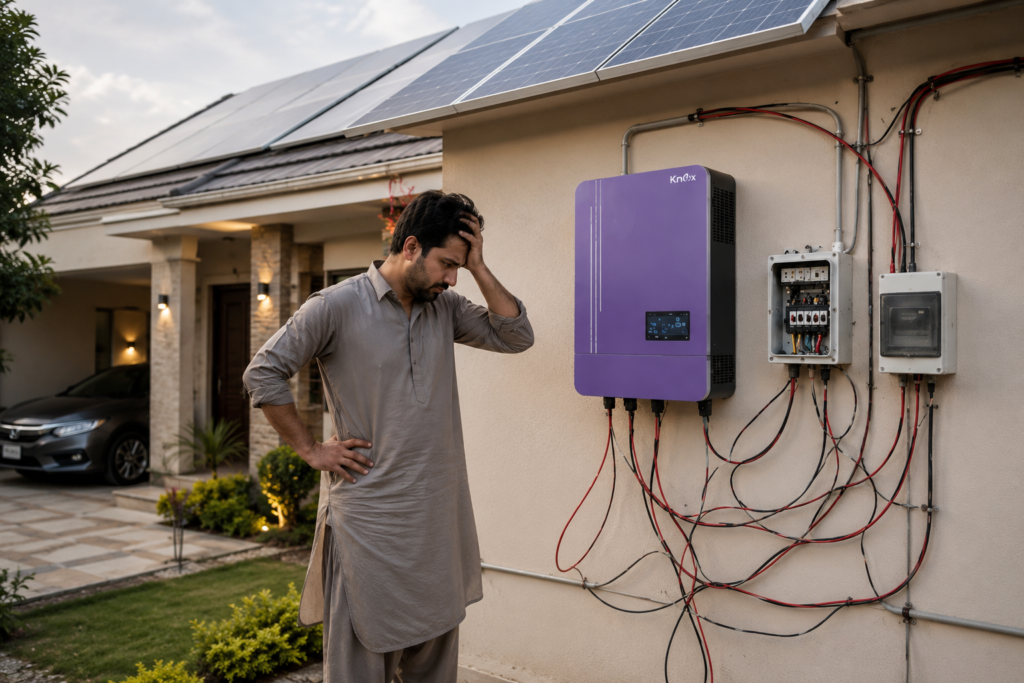
Common Hybrid Inverter Mistakes to Avoid in Pakistan
Solar adoption in Pakistan has moved from a niche upgrade to a mainstream necessity. Rising grid tariffs, unpredictable load shedding, and falling panel prices have pushed thousands of homes and businesses toward hybrid solar systems every month. But a hybrid inverter is only as good as the decisions made around it, and a surprising number of installations underperform not because of bad equipment but because of avoidable mistakes made before, during, and after installation.
Below is a practical breakdown of the mistakes that most commonly shorten inverter life, reduce output, or trigger nuisance shutdowns in Pakistani conditions, along with how Knox Solar approaches these problems in its own hybrid systems.
1. Buying on Price Alone, Not Climate Suitability
The single biggest mistake homeowners make is choosing an inverter based purely on upfront cost. Pakistan’s climate is unusually demanding: cities such as Multan, Jacobabad, and Sukkur regularly cross 45–49°C in summer, while coastal areas like Karachi combine heat with humidity and salt air. Budget inverters that were never engineered for these extremes tend to run hotter, degrade faster, and fail years ahead of schedule.
A more reliable approach is to check whether the unit was actually designed for high-ambient-temperature operation rather than simply imported and rebadged. Knox Solar’s residential on-grid and hybrid inverters are built around thermal tolerance for exactly this kind of climate, so the upfront comparison should factor in years of reliable output, not just the price tag on day one.
2. Ignoring Ventilation and Installation Placement
Even a robustly built inverter can overheat if it is not properly installed. Many people tend to place the unit in direct sunlight, inside an unventilated cupboard, or beside the wall where heat is trapped and air cannot pass through. As time passes, this wears components out faster and leads to more thermal shutdowns on the hottest summer afternoons when an appliance is most likely to be needed.
The fix is straightforward: mount the inverter in a shaded, well-ventilated spot, ideally on a north-facing wall, with clearance on all sides as specified in the installation manual. This single decision has an outsized impact on how long an inverter lasts.
3. Overlooking Grid Voltage Compatibility
Pakistan’s distribution grid is known for voltage swings, particularly in areas with overloaded feeders or heavy industrial load nearby. Inverters with a narrow acceptable voltage window trip constantly under these conditions, which many users mistake for a hardware fault when it’s actually a mismatch between the grid and the inverter’s tolerance settings.
Before installation, it’s worth confirming the inverter’s rated input voltage range and whether it includes automatic reconnection logic once the grid stabilizes. Systems with a wider tolerance band handle Pakistan’s fluctuating supply far more gracefully, cutting down on the disconnect-reconnect cycles that frustrate users and stress internal components.
4. Skipping Dust and Debris Management
Most of Pakistan suffers from airborne dust year-round, and it is one of the least recognized factors causing the loss of solar output over time. Dust accumulates on the vents, filters, and internal fans and reduces airflow, making the inverter work harder to maintain its temperature. Ignored, this can work unnoticed across a season to reduce system efficiency by 10% or more.
Sealed, dust-resistant enclosures reduce how often this becomes a problem, but they don’t eliminate the need for basic upkeep. A quick monthly check of external vents, paired with an occasional panel clean, keeps output closer to its rated capacity.
5. Mismatching Battery and Inverter Specifications
Hybrid systems depend on the inverter and battery working in sync, matching voltage, chemistry, and charge algorithms. A frequent mistake is pairing an inverter with a battery it wasn’t validated against, which can lead to incomplete charging, premature battery aging, or the system defaulting to conservative charge limits that shrink usable backup.
Sticking with a manufacturer-tested combination, or at minimum confirming voltage and communication protocol compatibility before purchase, avoids most of these issues. Knox Solar’s residential energy storage and powerwall ranges are built to work as a matched set with their hybrid inverters, which removes this guesswork for the end user.
6. Ignoring Error Codes Instead of Reading Them
When an inverter displays a fault code, many users either ignore it or simply power-cycle the unit repeatedly without understanding what triggered it. Some codes, like a minor over-voltage trip are harmless and resolve on their own. Others, such as a ground fault or insulation resistance warning, indicate a genuine safety issue that shouldn’t be reset and forgotten.
The safer habit is to note the exact code, check it against the manufacturer’s manual or app, and escalate anything related to grounding, insulation, or repeated overheating to a qualified installer rather than continuing to restart the system.
7. Neglecting Firmware and Monitoring Updates
Inverters sold even a year or two ago may be running outdated firmware that doesn’t reflect current grid codes or optimal MPPT tracking logic. Skipping updates isn’t dangerous in most cases, but it does mean missing out on efficiency improvements and compatibility fixes that manufacturers release specifically in response to field issues reported in markets like Pakistan.
Where an app or monitoring platform is available, keeping it connected also makes it far easier to catch a slow decline in output before it turns into a full failure rather than only noticing a problem once the electricity bill jumps.
8. Treating the Inverter as a “Set and Forget” Device
Perhaps the broadest mistake is assuming that once a hybrid system is installed, it needs no further attention. In reality, a hybrid inverter is an active piece of electronics operating in one of the more demanding climates in the world for solar equipment. Periodic checks, vent cleaning, connection inspection, firmware updates, and monitoring review extend lifespan meaningfully and catch small issues before they become expensive ones.
Choosing a System Built for Pakistani Conditions
Most of the mistakes above share a common root cause: treating hybrid inverter selection and upkeep as an afterthought rather than a deliberate decision. Systems designed specifically with high heat, dust, and grid instability in mind rather than adapted after the fact tend to avoid these failure points from the start.
Knox Solar designs its hybrid inverters and energy storage systems around Pakistan’s operating conditions, with attention to thermal management, wide voltage tolerance, and battery compatibility built in from the engineering stage rather than added later. To see which configuration fits a specific home or business load, it’s worth reviewing the full product range or reaching out through the contact page for guidance tailored to the installation site.
Frequently Asked Questions
What is the most common hybrid inverter mistake in Pakistan?
Choosing an inverter based on price alone rather than checking whether it’s rated for high-ambient-temperature operation and Pakistan’s typical grid voltage swings.
Does installation location really affect inverter lifespan?
Yes. Mounting an inverter in direct sunlight or an unventilated space is one of the fastest ways to trigger thermal shutdowns and shorten component life.
Should every fault code be treated as an emergency?
No, but codes related to grounding, insulation resistance, or repeated overheating should always be checked by a professional rather than reset repeatedly.
How often should a hybrid inverter be inspected?
A monthly visual check of vents and a professional connection inspection once a year is generally enough to catch most developing issues early.