


Introduction: Energy Is the Hidden Cost of Farming
Every farm runs on energy. Irrigation pumps, cold storage, grain dryers, dairy equipment, and greenhouse systems all depend on electricity or diesel, and rising fuel prices and unreliable grid supply cut directly into profit margins. That is why more growers are adopting photovoltaic (PV) technology as a core business strategy rather than a luxury. A well-designed system from Knox Solar turns sunlight, an abundant and free resource, into predictable, long-term farm power.
1. Dramatically Lower Operating Costs
Energy is one of the largest recurring expenses in agriculture. Solar replaces much of that spending with a one-time capital investment.
- Reduced electricity bills: Solar generation offsets grid consumption during peak daylight hours, when most irrigation happens.
- Less diesel dependence: Solar-powered tubewells and pumps eliminate fuel purchases, transport, and generator maintenance.
- Predictable budgeting: Sunlight has no price volatility, so farmers can forecast costs for 20 to 25 years.
Explore tailored solar solutions for agriculture to see how these savings apply to your acreage and load profile.
2. Strong Return on Investment (ROI)
Solar is a high-yield asset because it pays for itself.
Short Payback Period
Many agricultural systems recover their cost within a few years through savings on fuel and electricity. After that, the power is effectively free.
Long Asset Lifespan
Quality solar panels are warrantied for 25 years or more, while a reliable solar inverter typically serves a decade or longer with proper maintenance. This gives farmers a stable, income-protecting asset well beyond the break-even point.
Increased Land and Property Value
Farms with installed renewable infrastructure often become more attractive to lenders, buyers, and investors.
3. Reliable Power for Irrigation and Crop Production
Water is the lifeblood of farming, and power outages at the wrong time can damage crops.
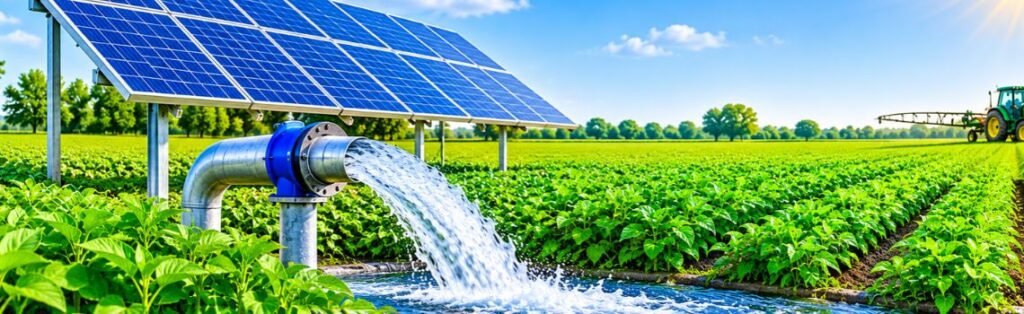
- Solar water pumping systems run automatically whenever the sun shines, matching peak irrigation demand.
- Hybrid configurations combine solar, battery storage, and grid backup for round-the-clock reliability.
- Remote operation: Off-grid solar powers fields far from utility lines, with no costly grid extension.
A high-efficiency solar inverter converts DC power from the panels into usable AC power for motors and equipment, and smart inverters can track performance and optimize output in real time.
4. Powering the Entire Agricultural Value Chain
Solar’s benefits extend beyond the field.
- Cold storage and warehousing: Keep produce fresh and reduce post-harvest losses.
- Dairy and poultry farms: Run milking machines, ventilation, cooling, and lighting efficiently.
- Greenhouses and vertical farms: Power climate control, grow lights, and automation.
- Processing and packaging units: Cut energy costs in milling, drying, and food processing.
Browse the full range of commercial solar systems designed for diverse agribusiness needs.
5. Environmental Sustainability and Brand Value
Climate change affects farming directly, through erratic rainfall, heat stress, and soil degradation. Going solar helps agriculture reduce its own carbon footprint.
- Lower greenhouse gas emissions compared with diesel generators and fossil-based grid power.
- Sustainable farming credentials that appeal to eco-conscious buyers, exporters, and retailers.
- Dual land use (agrivoltaics): Panels can be installed above or alongside crops, generating energy while providing partial shade that reduces water evaporation.
6. Government Incentives and Net Metering
Many regions support renewable energy through favorable policies. Depending on local regulations, farmers may benefit from:
- Net metering, which lets farms export surplus electricity to the grid for credits or compensation.
- Subsidies, tax benefits, and low-interest financing for renewable installations.
- Energy independence, which reduces exposure to tariff hikes and load-shedding.
Working with an experienced provider like Knox Solar ensures your system meets technical standards and local compliance requirements.
7. Low Maintenance, High Dependability
Solar systems have no moving parts in the panels, so maintenance is minimal.
- Periodic panel cleaning to remove dust and debris
- Routine inspection of wiring, mounting structures, and the solar inverter
- Remote monitoring to catch performance issues early
This simplicity lets farmers focus on crops and livestock, not equipment repairs.
How to Choose the Right Solar Partner
A successful project depends on proper design and quality components. Look for:
- Accurate load assessment based on pump size, hours of operation, and seasonal demand
- Tier-1 solar panels and certified inverters
- Professional installation and after-sales support
- Transparent warranties and performance guarantees
Ready to start? Contact the Knox Solar team for a customized proposal and savings estimate.
Conclusion: A Future-Proof Investment for Farmers
Solar energy delivers what agriculture needs most: lower costs, reliable power, higher profitability, and long-term resilience. With strong ROI, minimal maintenance, and environmental benefits, it is one of the smartest capital decisions a modern farm can make. Partner with Knox Solar to power your fields with clean, dependable energy.