


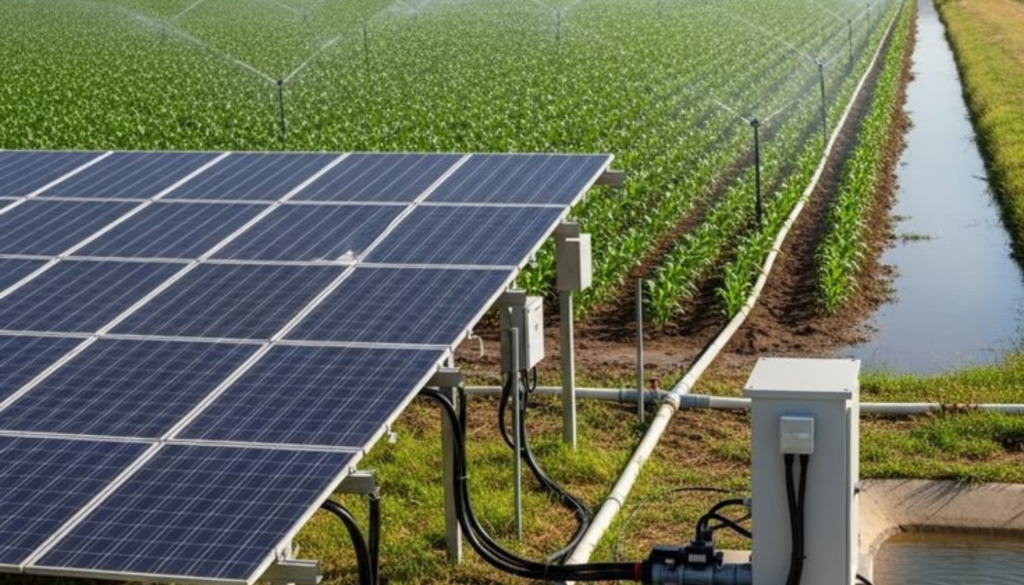
Agricultural Solar Inverters Avoid the Wrong Choice
It’s 6 a.m. The fields are dry, the tube well is waiting, and the grid has gone dark again. Or the power is on, but the electricity bill is eating your margins.
Solar can help, but only if the inverter fits your job. The right choice depends on your pump or equipment load, motor phase, operating hours, available sunlight, and how much backup you need. Get that wrong, and even a great solar array won’t help. KNOX Solar offers a range of inverters, so let’s find out which kind you need.
Why Are Farmers Quietly Switching to Solar?
Irrigation is hungry, and it usually runs when the sun is up. That is a natural match. Solar may reduce grid electricity use and generator dependence, though how much depends on system size, your schedule, local tariffs, and installation cost. Anyone promising guaranteed savings is guessing.
What Does a Solar Inverter Actually Do on a Farm?
Think of the inverter as the translator. Panels make DC electricity, but your motors and equipment speak AC. The inverter converts one to the other, matches the output to your load, and, depending on the model, manages the grid, batteries, and monitoring too.
The simple version: panels collect, the inverter converts, batteries store, and a pump controller steers the motor.
Pump Inverter, Hybrid, or On-Grid: Which One Is Yours?
These are different products, and mixing them up is expensive.
Type | Best for | Watch out for |
Dedicated solar pump inverter | Daytime water pumping | Motor and pump compatibility |
Hybrid inverter | Mixed loads with solar, grid, and battery | Backup limits; not automatically pump-ready |
On-grid inverter | Reducing grid use | Usually shuts down in an outage |
Off-grid inverter | Little or no grid access | Storage and sizing |
C&I inverter | Larger agricultural facilities | Electrical design and scale |
Capabilities vary by model, so always check the datasheet. Browse the KNOX solar inverter range to compare.
The Hidden Moment That Trips Up Most Pump Systems
Motors don’t just run. They start, and startup can draw far more current than running does. That is why horsepower alone can’t pick your inverter.
There is no universal multiplier. The real answer lives in your motor nameplate, starting method, and pump characteristics. A hybrid inverter shouldn’t run a pump directly unless its output, motor-starting capability, and phase have been confirmed as compatible.
kW vs kWh: The Mix-Up That Costs Farmers Money
Here is a quick test. Is a 5 kW inverter the same as 5 kWh of energy? No.
kW is power, how much you can draw at once. kWh is energy, how much you use over time. The inverter’s kW rating shows what it can handle at one moment. Your daily kWh shows how much generation or storage you actually need.
Do You Really Need Batteries?
Not always. If your pumping happens in daylight, direct solar pumping can work without batteries. A water tank can also act as storage: pump while the sun shines, use the water later.
Batteries earn their place when you need power at night or during outages, for example for poultry ventilation or cold storage. Don’t assume 24-hour operation without a proper calculation of generation, storage, and load.
Tube Wells: What Changes When the Sun Moves?
Sunlight rises, peaks, and fades, and your pump’s available power moves with it. Output depends on pump head, flow rate, groundwater depth, array size, and system design, not just the inverter’s rating.
Before you call anyone, collect:
- Motor nameplate details (HP, input, voltage, phase)
- Daily operating hours
- Required flow and water depth
- Grid or generator availability
- Desired backup time
- Any existing panels or batteries
Beyond Irrigation: When Power Cuts Hurt More
Dairy, poultry, greenhouses, and cold storage run on different rules. Fans, cooling, refrigeration, and lighting can keep running when pumps stop, and an outage can mean real losses. Refrigeration compressors also have startup demands. A small inverter is rarely enough for commercial cold storage without a proper load assessment.
A Quick Illustrative Example
This example is for learning only, not a KNOX product recommendation.
Suppose a three-phase pump motor nameplate reads 3.7 kW (about 5 HP) output. At an assumed 88% efficiency, the electrical input is about 4.2 kW. Run it 6 hours a day and you need roughly 25 kWh daily (4.2 × 6).
Next, you check the starting method and current, confirm the voltage and phase, add any other loads that run at the same time, and match the inverter’s continuous rating and motor capability. The array and storage follow from the operating hours and sunlight. A nominal kW figure alone never guarantees compatibility.
Where Does KNOX Fit In?
KNOX documentation references the Hober series for solar pumping, along with hybrid options such as the three-phase Xenon models and commercial inverters. Because specifications, availability, and suitability must be confirmed for each application, check the current datasheets on the product pages and have KNOX verify your pump match. Not sure where to start? The KNOX Solar FAQs are a good first stop, and About KNOX Solar tells you who you’d be talking to.
Seven Mistakes That Quietly Drain Your Investment
- Choosing by horsepower alone. Check the full nameplate.
- Ignoring starting current. Confirm motor-starting capability.
- Treating pump and hybrid inverters as interchangeable. Match the product to the job.
- Confusing kW with kWh. Calculate both.
- Expecting an on-grid inverter to give backup. It usually won’t in an outage.
- Buying batteries blindly. Define the backup duration first.
- Skipping PV voltage and current limits, and installation basics. Use qualified installers for sizing, earthing, protection, and ventilation.
Your Next Step
The best solar inverter for agriculture isn’t the biggest or the cheapest. It’s the one that fits your motors, your hours, your sunlight, and your backup needs.
Planning a solar-powered irrigation system or farm installation? Explore KNOX Solar’s product range and contact the team through the website to discuss your application, equipment ratings, and system requirements.