


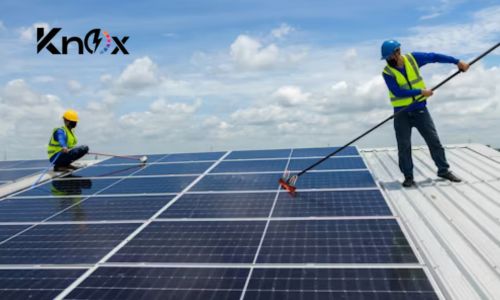
Solar panels handle a heavy electrical load and are used every day. Solar panels are installed at the top of the roof so where there is no possibility of proper protection rain, dust and sunlight affect solar panels but if we maintain them properly they can last for a long time .Otherwise after a few years the performance of solar panels goes down.
Without maintenance there is nothing which can stay for long term in better condition .Same here in solar panels even high quality solar panels lose efficiency over time if they’re not properly maintained.A thin film of dust ,a bird’s nest tucked under a pane,or a slow creeping inverter fault can quietly cost you hundreds of thousands in energy production .
This Knox solar panel maintenance guide walks you through everything.How to safely clean to this.what to watch for,and when to call in a professional.This guideline is applicable for everyone whether you’re a homeowner with a 10 panel rooftop or business running,this guide gives you actionable and expert level advice you can actually use.
Most manufacturers recommend a maintenance routine to keep your panel operating at a high level of efficiency.
Efficiency Losses from Dirt and Debris
If your solar panels are not clean .There is dust and soil on them they can reduce output 5 to 25%.In dry and dusty areas, that figure can climb even higher.Even in clean areas ,airborne particles,pollen,and bird dropping build up gradually and create shading that cuts into your energy production
Prevent Expensive Repairs
There is no doubt solar panel and inverters repairing is very expensive and also extra headache sometime after repairing they are still not working properly.Because they get badly damaged.a failing inverter, loose wiring or solar panel layer separation.catching these issues during routine maintenance is infinitely cheaper than repairing.
Better ROI
Maintenance of your solar with an efficiency of up to 90 to 95% instead of 80% means you are getting the maximum possible return and payback period you were promised when you signed up.
Safety
Broken panels and rusted wiring and weakening mounted parts can create real safety dangers. Regular inspection catches these hazards before they become serious.
How Often Should Solar Panels Be Cleaned?
There’s no one-size-fits-all answer — your local environment matters enormously. Here’s a practical breakdown:
There is no one size fits all answer; it depends on the situation of your environment. So it’s not good practice to apply the same rule everywhere.
| Environment | Recommended Cleaning Frequency |
| Dusty / Desert Areas | Every 1–2 months |
| Coastal Areas (salt air) | Every 2–3 months |
| Rainy Climates | Every 6 months (rain helps, but isn’t enough) |
| Industrial / Urban Pollution | Every 2–3 months |
| Homes with Trees / Birds | Every 1–3 months depending on season |
| Commercial Solar Systems | Quarterly minimum; monthly in high-soil zones |
Sometimes rainfalls by itself help us to clean the solar panel.Light dust reasonably well.But it can not remove stubborn residue like bird droppings,pollen paste.Rely on only rain is not good .
A good rule of thumb is checking the monitoring app daily. If output goes down more than 10 to 15% then it means it is the time to clean your solar panel.
Signs Your Solar Panels Need Cleaning
You don’t always need to climb on the roof to know something’s wrong. Watch for:
- Significant decrease in energy usage on monitoring tools or on the electric meter
- Dirt, dust or streaks on panels (including from the ground using binoculars)
- Confined bird faeces in particular, which form hotspots should be avoided.
- The accumulation of pollen in spring months forming a yellow-green film
- When leaves fall around the perimeter or under panels.Fall leaves around edges or under panels.
- Growing moss/algae in shaded or humid areas
- The non-recoverable production that follows a rainy period.
Step-by-Step: How to Clean Solar Panels Safely
Cleaning solar panels is straightforward — as long as you do it right. Here’s how to do it safely and effectively.
1. Shut Down the System Safely
For safety purposes ,First of all power down to your solar panel according to the procedure of your manufacturer.This is usually outlined in your inverter manual. Never work on live solar equipment.
2. Choose the Right Time of Day
Clean panels in the early morning or evening never at midday.Hot glass surface of a solar panel and cold water can cause thermal shock and micro cracking.Morning is ideal because the panels are cool and there is a light dew that loosens surface grime.
3. Gather the Right Tools
You’ll need:
- A soft bristle brush or solar panel cleaning brush (extendable handles are best for roof panels).
- A squeegee with a soft rubber blade
- A bucket of warm water NOT hot water!A bucket of warm water — NOT hot water!
- A mild soap (any kind of soap; not one that contains strong chemicals)
- A garden hose with a low pressure spray nozzle.
4. Apply the Gentle Wash
First of all lightly wet the solar panel surface.Apply soapy water with a soft brush using a long,gentle stroke, do not scrub or apply heavy pressure.Work from top to bottom so dirty water runs away from clean areas.
5. Rinse Thoroughly
Rinse it again with clean water ,working from top to bottom and make sure there is no soap left behind because even a small amount of soap remains and dries on the surface, it can create a thin invisible layer.
When to Call a Professional
- Not everything about solar panel maintenance is feasible by the end user. When it comes to certified solar technicians, call them when:
- Your roof is steep or tall — safety first — do not take the risk of falling for a roof-cleaning task!
- Cleaning does not result in an increase in output — this indicates a problem with the electrical or panel.
- You notice physical damage, such as cracks, burn marks or delamination – this requires professional evaluation.
- Complete an insurance and/or warranty claim — professional inspection report will be required
- It is required by your warranty — some manufacturers’ warranties call for annual inspections by a professional.
- The inverter is displaying fault codes – these require trained and qualified technician with diagnostic equipment
- You haven’t had a professional check since – an annual inspection is smart housekeeping for any solar owner – 12+ months ago.
Costs of Solar Panel Maintenance
Maintenance costs vary by region, system size, and access difficulty, but here are realistic general ranges:
| Service | Estimated Cost |
| DIY Cleaning (materials only) | $10–$50 |
| Professional Panel Cleaning | $100–$350 per visit |
| Annual Professional Inspection | $150–$500 |
| Inverter Replacement | $1,000–$2,500+ |
| Panel Replacement (per panel) | $200–$600+ |
| Thermal Imaging Scan | $200–$400 |
Routine cleaning and inspection is a small cost compared to losing 15–20% of your system’s energy production year after year — or facing a panel replacement that could have been avoided.
For maximum solar production throughout the year, here are a few pro tips.
- In addition to the fundamentals, here are some of the key things power owners do to get the most out of their systems:
- Establish and track monthly goals. Be familiar with the average amount of electricity your system generates on a sunny day during each of the four seasons. Deviations greater than 10% should be investigated.
- Implement a monitoring application with notifications. Most contemporary inverters are linked to applications (SolarEdge, Enphase, Fronius) that alert you whenever the output decreases. Enable them.
- Set up bird deterrents early in the season. Birds do not nest with mesh guards under panels nor can they cause damage — allowing panels to be much, much more secure without the cost of later damage.
- To clean before and after high-pollen period. Sticky deposits form during pollen season that trap other particles. Performance is kept high with a clean before and after.
- If it is hard to access the roof, consider a water-fed pole system to clean the roof at ground level. Pure water brushes do a good job and don’t require soap or rinsing.
- Maintain a Maintenance Log. Record the date, weather conditions and output readings for each cleaning. Patterns form that let you know if there are developing issues.
- Have annual checks in the fall. This is to ensure optimal performance during the winter season when the amount of sunlight is reduced.
Conclusion
The solar panel maintenance guide above has got you all the information you will require: What is the proper frequency to clean, how to do it properly, what you should avoid doing and when to call in the professionals. There is no need to be complicated, it’s all about consistency.
Maintenance makes things safe and increases it’s long life.A well maintained solar panel doesn’t just produce more energy it lasts longer, safer and delivers ROI you were promised when you invested on it.