


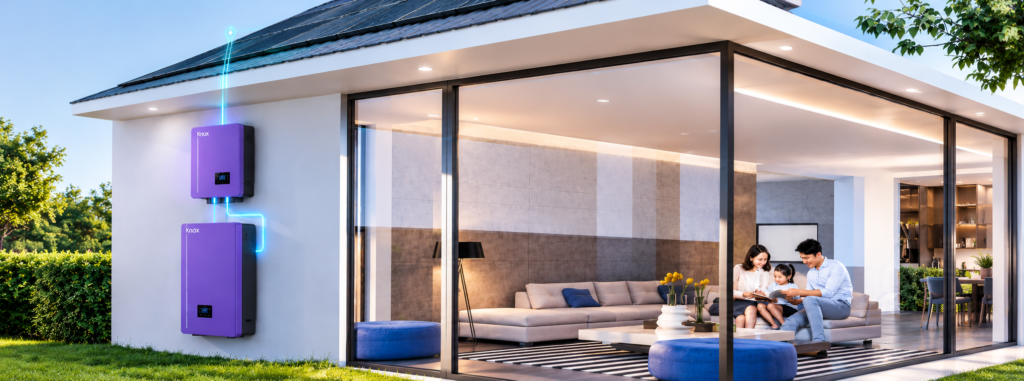
KNOX PowerStack A High Voltage Battery
Looking for one of the best solar batteries in Pakistan? For years, most solar setups ran on 48V low voltage batteries. They still work well for small homes, but high voltage batteries are now changing the game.
They handle bigger loads, respond instantly, and come with better safety features. One of the newest options is the KNOX PowerStack, which offers 1C charging and discharging.
In this guide, we explain what that means, why it matters, and who really needs it.
What Does “1C” Actually Mean?
The C-rate tells you how fast a battery can charge or discharge compared to its size. A 1C battery can deliver its full stored energy in one hour.
So a 10 kWh battery rated at 1C can supply about 10 kW of power continuously.Now compare a 1C battery with a 0.5C battery of the same size. The 1C battery can give you roughly double the power. That means:
- You need fewer batteries for the same load
- It recharges faster while the sun is shining
- It handles sudden power spikes from motors, compressors and air conditioners much better
If you want to see how this fits into a complete setup, take a look at the solar energy storage solutions from KNOX.
Why a 102.4V to 800V Range?
The PowerStack is modular, and that is where its voltage range comes from. LiFePO4 cells run at a nominal 3.2V each, so 32 cells in series give you 102.4V. Add more modules to the stack and the voltage climbs step by step, up to 800V.
Why does higher voltage help? Simple physics: for the same power, higher voltage means lower current. And lower current gives you:
- Less heat in cables and connectors
- Thinner, cheaper wiring over long distances
- Better inverter efficiency
- Less energy lost during conversion
This is why modern hybrid inverters and three-phase commercial systems pair so well with a high voltage lithium battery. For factories, warehouses and large solar plants, those small efficiency gains add up fast.
Start Small, Grow Later
One of the best things about a stackable system is that you do not need to buy everything on day one. Start with a few modules and add more as your power needs grow.
This suits Pakistan well. Electricity tariffs, net metering rules and household loads keep changing, and a scalable battery protects your investment from those changes. Planning a bigger setup? Our solar panels and inverters range can help you build the full system around it.
Safety Comes First
Battery safety matters even more at high voltage. A quality system protects you in several layers:
- Stable chemistry: LiFePO4 is more thermally stable than other lithium-ion types and far less likely to suffer thermal runaway.
- Smart BMS: The battery management system watches cell voltage, current and temperature in real time, balances the cells and shuts things down if a fault appears.
- Anti-fire design: If one cell overheats, the design contains the problem inside a single module.
For homes, offices and industrial sites, this layered approach lowers risk and helps with insurance and safety requirements.
Built for Pakistan’s Weather
Pakistan’s climate is extreme. Winters in Gilgit-Baltistan and Murree are freezing, while summers in Sindh and Punjab often cross 45°C. Pushing a battery beyond its comfort zone hurts efficiency and sometimes lifespan.
The PowerStack works from -30°C to 60°C, which suits telecom towers, remote solar sites and utility rooms with poor ventilation. As with any battery, always check the datasheet for exact charging and discharging limits within that range.
Who Should Use a 1C High Voltage Battery?
- Commercial and industrial sites: peak shaving, backup power and less reliance on diesel generators
- Solar plus storage: save daytime solar energy for the evening
- Telecom and data centers: dependable backup where downtime is costly
- Large homes and farms: air conditioners, workshops and tube wells
- Microgrids: remote or off-grid communities that need steady power
Not sure which category you fall into? Talk to the KNOX team and get advice based on your actual load.
How to Pick the Right Energy Storage System
Before you buy, check these five things:
- Compatibility: Make sure the battery works with your hybrid inverter’s voltage window and communication protocol (CAN or RS485).
- Cycle life: Look for 6,000+ cycles and a clear warranty.
- Usable capacity: Depth of discharge matters more than the number printed on the label.
- Certifications: Look for recognized standards such as IEC and UN38.3.
- After-sales support: Local service and spare parts make a big difference in the long run.
Quick Answers to Common Questions
What does 1C mean in a battery?
It means the battery can fully charge or discharge in one hour.
Is a high voltage battery better than a 48V battery?
For larger systems, yes. You get higher efficiency, lower current and simpler cabling. For a small home setup, a low voltage battery may still be enough.
Is LiFePO4 safe?
It is one of the safest lithium chemistries available, especially when paired with a good BMS.
Can I expand the system later?
Yes. With a modular design like the PowerStack you can add modules later, within the limits of your inverter.
Conclusion
The KNOX PowerStack brings together 1C power, a 102.4V to 800V range, modular scalability, wide temperature tolerance and built-in fire protection. In short, it covers what matters most in energy storage: performance, flexibility and safety. As Pakistan moves toward solar and smarter energy management, high voltage battery systems are likely to lead the way.
Ready to upgrade your power setup? Explore KNOX PowerStack and the full KNOX range today.
needs.