


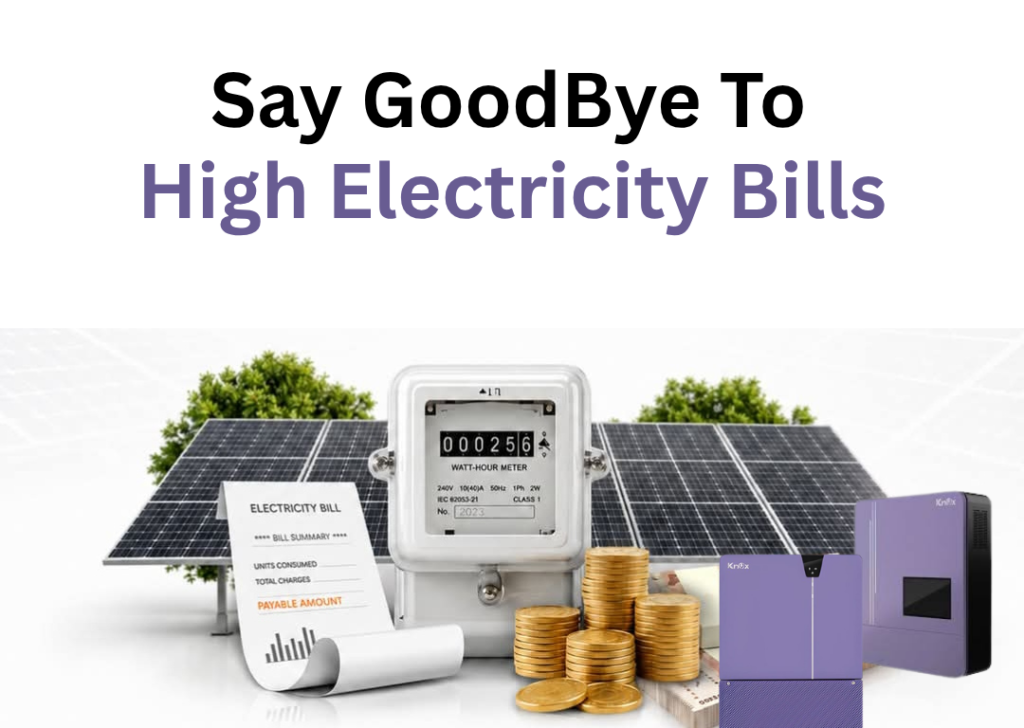
How to Reduce a 10K–15K Electricity Bill with Solar in Pakistan
If your monthly WAPDA bill sits somewhere between Rs. 10,000 and Rs. 15,000, you’re in the exact bracket where solar makes the most financial sense in Pakistan. You’re using enough electricity that net metering and self-consumption actually add up, but you don’t yet need a massive industrial-scale system. This guide walks you through exactly how to bring that bill down realistically, safely, and without overspending on equipment you don’t need.
Why Your Bill Is Actually This High
A 10K–15K bill usually means your household is running 2–3 air conditioners (even occasionally), a refrigerator, a couple of irons, water motors, and standard lighting and fans. On slab-based tariffs, this usage often pushes you into a higher per-unit rate, which is why the bill jumps disproportionately compared to your actual consumption. This is the tariff trap solar is designed to solve once you generate your own units during the day, you stop paying for them at the expensive top-of-slab rate.
The Right System Size for a 10K–15K Bill
For this bill range, most homes in Pakistan land comfortably in the 3kW to 5kW solar system category. Anything smaller won’t offset enough load, and anything larger becomes overkill unless you’re planning to add appliances or an EV charger later. The smart move is choosing an inverter that can handle your current load with 20–30% headroom for future expansion this is where picking the right brand and model actually matters more than people expect.
Choosing an Inverter That Matches This Load
This is the part most people get wrong they either underbuy and the inverter trips constantly, or they overbuy and pay for capacity they’ll never use. Knox Solar’s product range is built with exactly these tiers in mind, and browsing the Knox product catalog makes it easy to compare options side by side before deciding.
For a 10K–15K monthly bill, here are the inverter families worth shortlisting:
- Knox Krypton Series – The standard single-phase hybrid line, available from smaller entry models up through higher-capacity units. It’s the most common choice for residential homes because it handles solar input, battery backup, and grid switching in one unit, and scales up smoothly if your household grows.
- Knox Xenon IP66 Series – Same hybrid functionality as Krypton but housed in a weatherproof, dust-and-water-resistant enclosure, which makes it a better fit if your inverter has to sit outdoors or on an exposed wall.
- Knox Zynex Series – A step up for homes that want more flexibility, with multiple independent MPPT inputs so you can wire panels in different orientations (useful for smaller rooftops) and still get full output.
- Knox Argon Off-Grid Series – Worth considering if your area has frequent, extended outages and you want a simpler backup-first setup rather than full net metering.
You can go through full specifications for each of these on the Knox inverter product pages or check their FAQs section if you’re unsure which class fits your load profile.
Why Combo Deals Make More Sense for This Bracket
Buying an inverter and a battery separately often means mismatched specs and compatibility guesswork. Knox’s inverter-plus-battery combo packages solve this by pairing a correctly-sized hybrid inverter with a matching lithium (LiFePO₄) battery, so the whole system is pre-matched for voltage, capacity, and charge rate. As shown on Knox’s official Facebook page, these combos come in multiple configurations different inverter capacities paired with different battery sizes so a household with a 10K bill and a household closer to 15K can each pick a combo suited to their actual usage instead of a one-size-fits-all bundle. This is generally the most practical route for first-time solar buyers, since it removes the guesswork around compatibility.
Steps to Actually Cut Your Bill
- Track your peak-hour usage for two weeks so you know exactly what’s driving the bill up.
- Size the system to your daytime load, not your total load — solar without a battery only offsets what you use while the sun is out.
- Register for net metering with your DISCO so unused daytime generation is credited against nighttime consumption.
- Pick a hybrid inverter with battery support, even if you add the battery later it future-proofs the investment.
- Get panels installed at the correct tilt and orientation for your city; a poorly angled array can lose 15–20% output.
- Service the system annually dirty panels and loose connections are the most common reason people don’t see the savings they expected.
A Realistic Expectation
A correctly sized 3–5kW hybrid system, paired with disciplined daytime usage of high-load appliances, typically brings a 10K–15K bill down to a fraction of that within the first billing cycle after net metering kicks in. The exact number depends on your DISCO’s rates, your roof’s sun exposure, and how consistently you shift usage to daylight hours but the mechanism is straightforward: every unit you generate is a unit you’re not buying from the grid at the top slab rate.
Conclusion
If you’re serious about cutting this bill down permanently rather than temporarily, the two decisions that matter most are correct system sizing and choosing hardware that’s built to last through Pakistan’s heat and voltage fluctuations. Take a look at Knox’s full product range, read through their about us page to understand their warranty and service network, and reach out through their contact page for a load-based recommendation before you buy. A short conversation with a specialist upfront can save you from an expensive resizing job later.