


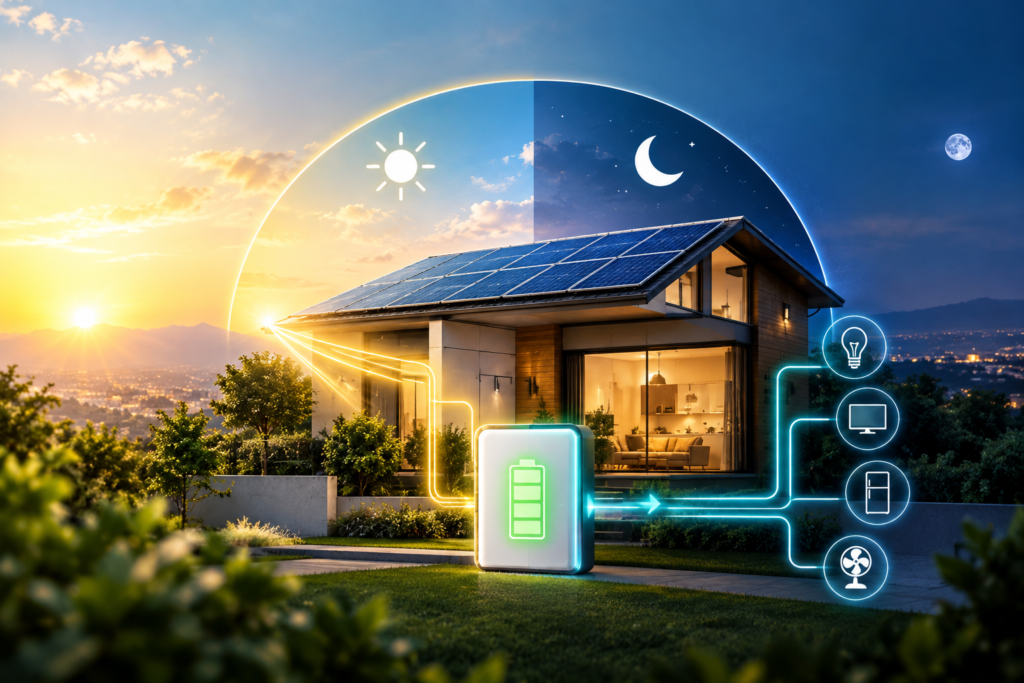
How Lithium Batteries Improve Solar Performance
When you think the alternative source of energy is solar instead of relying on WAPDA . it does not mean installing high quality solar panels are good enough because solar panels solve half the problem .They work only in day time but what will happen in rainy seasons or after 9pm.For a complete solution and using electricity 24/7 independently without worrying about power outage .There is always high quality solar inverter battery is important (Lithium Battery).
Lead-acid batteries were the default for years. Today, lithium iron phosphate (LiFePO₄) storage has changed the math on solar performance, backup reliability, and lifetime cost. Homeowners comparing options through KNOX Solar are making the switch for measurable reasons, not marketing ones.
What Makes LiFePO₄ Different From Lead-Acid
Lithium iron phosphate uses a chemically stable cathode structure that resists thermal runaway and holds voltage steady under heavy load. Lead-acid chemistry sulfates over time, degrades under deep discharge, and loses capacity fast in high ambient temperatures a real problem in Pakistani summers.
The practical differences:
- Energy density: more usable kWh in a smaller, lighter unit
- Voltage stability: appliances and motors run without dips or flicker
- Thermal tolerance: safer operation in 40°C+ conditions
- Integrated BMS: automatic cell balancing and protection
These aren’t spec-sheet details. They’re the difference between a system that works for ten years and one that needs replacing in three. Knox Solar’s lithium storage range is built around this chemistry specifically for local grid and climate conditions.
How Lithium Batteries Improve Solar Performance
Higher Depth of Discharge
Depth of discharge (DoD) is the most overlooked metric in battery buying. Lead-acid batteries safely deliver only 30–50% of rated capacity. Exceed that regularly and lifespan collapses.
LiFePO₄ batteries safely deliver 80–95% DoD. A 100Ah lithium unit gives you roughly double the usable energy of a 100Ah lead-acid unit from the same rooftop generation.
Faster Charge Acceptance
Lithium batteries absorb charge current far more efficiently, capturing peak midday solar output instead of wasting it. Less clipped generation means more stored energy per sunny day, which is exactly why pairing panels with Knox Solar energy storage improves overall system yield.
Better Round-Trip Efficiency
Round-trip efficiency measures energy retained between charging and discharging. Lithium typically reaches 95%+, compared to 70–85% for lead-acid. Lower losses also mean lower heat generation and cooler, safer operation.
Lowering Long-Term Energy Costs
Factor | Lead-Acid | LiFePO₄ |
Cycle life | 300–800 | 4,000–6,000+ |
Usable capacity | 30–50% | 80–95% |
Maintenance | Frequent | Minimal |
Lifespan | 2–4 years | 10–15 years |
Lead-acid looks cheaper on day one. Across a decade with two or three replacements, servicing visits, and wasted generation it costs significantly more. Calculating total cost of ownership rather than sticker price is why most customers exploring Knox Solar systems choose lithium.
Zero Maintenance
No water top-ups, no equalization charging, no corrosion checks, no ventilation requirements. The onboard BMS handles balancing automatically. That removes both a recurring cost and a recurring chore.
Lithium Batteries and Inverter Compatibility
Modern hybrid inverters need storage that can handle high discharge rates and rapid source switching without voltage sag. Lithium delivers that; lead-acid often can’t.
This matters more as smart inverter technology advances. Knox Solar’s advanced inverter systems use adaptive energy management and live performance tracking capabilities that only work properly when paired with responsive lithium storage.
Backup Performance During Load-Shedding
Outage performance is the key driver for most households in Pakistan to invest in storage. Lithuanian batteries retain a standby charge longer and can handle the stop-start cycles which occur with irregular load shedding.
Lead-acid batteries age badly under this usage. Lithium handles it without meaningful capacity loss, which is why Knox Solar backup solutions are specified around LiFePO₄ cells.
Frequently Asked Questions
How long do lithium solar batteries last?
A quality LiFePO₄ battery lasts 10–15 years or 4,000–6,000+ cycles under normal residential use.
Are lithium batteries safe in hot climates?
Yes. LiFePO₄ chemistry is thermally stable and includes BMS protection against overheating, overcharge, and over-discharge.
Can I add lithium batteries to an existing solar system?
Usually yes, provided your inverter supports lithium charging profiles. A quick compatibility check with Knox Solar will confirm it.
Conclusion
Lithium is no longer the top-of-the-line upgrade, it’s the standard option for solar storage. The increased usable capacity, extended cycle life, improved efficiency, and low maintenance are elements that deliver a better system now and less cost over a system’s lifetime.
Explore the complete range at KNOX Solar to find storage sized correctly for your home’s actual load and backup needs.