


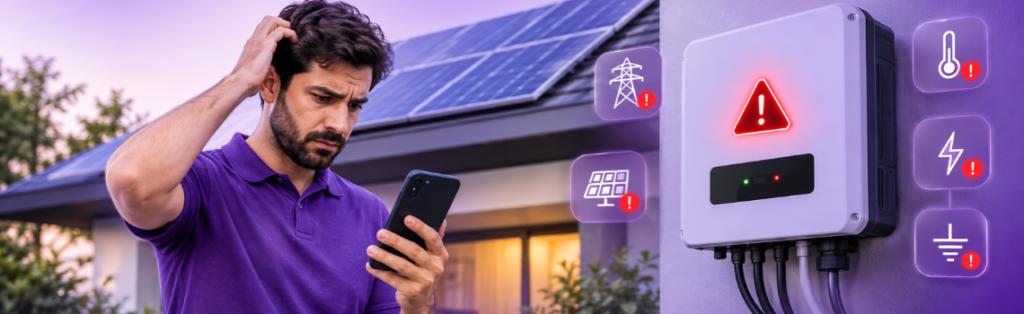
Common Solar Inverter Errors and Their Causes
Solar inverter is the mind of the solar system. It can be stressful when it displays an error code or a red light that is flashing. Luckily, most of the time, there are simple explanations for inverter errors. In this guide, you will learn about the most popular solar inverter problems, their causes and solutions.
What Does a Solar Inverter Do?
A solar inverter converts the direct current (DC) electricity from your solar panels into alternating current (AC) electricity. That is the power your appliances and the utility grid use. It also tracks performance through Maximum Power Point Tracking (MPPT) and shuts the system down when it detects a safety risk.
The inverter is a likely suspect since it’s busy working for the entire day. Each company has slightly different error codes, so please refer to the user manual for each brand: SMA, Fronius, SolarEdge, Enphase, Huawei, Growatt. The causes below are common to nearly all models .
Common Solar Inverter Errors and Their Causes
1. Grid Voltage Too High or Too Low
What you see: “Grid overvoltage,” “grid undervoltage,” or “AC voltage out of range.”
Common causes:
- Heavy solar generation in your neighborhood pushes grid voltage up
- Loose or corroded AC wiring
- Undersized cables causing voltage drop
- Utility grid instability.
Quick fix: The inverter usually restarts on its own once the voltage returns to normal. If it keeps happening, an installer can check your wiring or adjust the voltage settings. Knox PV can help diagnose persistent grid issues.
2. Ground Fault (Earth Fault)
What you see: A “ground fault” or “GFDI” warning, often with a red light.
Common causes:
- Damaged or chewed DC cables (rodents are a frequent culprit)
- Water entering junction boxes or connectors
- Faulty solar panels
- Poor grounding
A ground fault is a safety issue, so do not touch the equipment. Switch off the system if it is safe to do so and call a qualified technician.
3. Arc Fault Detected
What you see: “AFCI fault” or “DC arc fault.”
Common causes:
- Loose MC4 connectors
- Cracked wiring insulation
- Poor-quality connections
- Corrosion at terminals
An arc fault can be a fire hazard. Modern inverters shut down immediately to protect your home. This error should always be inspected by a professional.
4. Low Insulation Resistance
What you see: “Insulation resistance low” or “ISO fault.”
Common causes:
- Moisture after rain or morning dew
- Damaged panel back sheets
- Degraded cables or connectors
If the fault appears only on wet days and clears when it dries, you may have a small moisture leak somewhere in the DC circuit.
5. Inverter Overheating
What you see: “Over temperature” or reduced power output (derating).
Common causes:
- Direct sunlight on the inverter
- Blocked ventilation or dusty cooling fins
- Poor installation location
- Failing internal fan
Quick fix: Make sure the inverter has shade and airflow. Gently clean dust from vents and avoid placing objects around it.
6. No Grid / Grid Loss
What you see: “Grid fault,” “no utility,” or a blank display.
Common causes:
- Power outage
- Tripped circuit breaker or AC isolator
- Blown fuse
- Utility maintenance
Grid-tied inverters shut down during outages by design. This is called anti-islanding protection, and it keeps utility workers safe. Check your breaker first, then confirm the power is on.
7. DC Input Overvoltage or Low Production
What you see: “PV overvoltage,” “DC input too high,” or unusually low energy output.
Common causes:
- Too many panels in one string
- Very cold weather, which raises panel voltage
- Shading, dirt, or snow on panels
- MPPT or string configuration problems
If your system suddenly produces less than usual, panel soiling or shading may be the reason. A professional solar system inspection can pinpoint the exact cause.
8. Communication Error
What you see: “Communication lost” or monitoring app offline.
Common causes:
- Wi-Fi or router changes
- Weak signal near the inverter
- Damaged data cables
- Outdated firmware
This usually does not stop power production, but you lose monitoring data. Restarting the router and inverter often fixes it.
Quick Troubleshooting Checklist
Before calling for help, try these safe steps:
- Read the error code on the display or in your monitoring app
- Check the AC breaker and DC isolator
- Look for dirt, shade, or debris on panels
- Make sure the inverter vents are clear
- Restart the inverter following the manufacturer’s instructions
- Check for firmware updates
Never open the inverter or touch DC wiring yourself. Solar panels produce live voltage whenever there is light.
When to Call a Professional
Contact a certified solar technician if:
- The error returns after restarting
- You see a ground fault or arc fault warning
- There is a burning smell, buzzing, or visible damage
- Your energy production drops without explanation
- The inverter is older than 10 years
Experienced providers like Knox PV offer solar maintenance and repair services that keep your system safe and efficient.
How to Prevent Inverter Problems
A little care goes a long way:
- Schedule yearly professional inspections
- Keep panels and inverters clean
- Install the inverter in a cool, shaded, ventilated spot
- Use quality connectors and certified installers
- Monitor performance through your app weekly
- Keep firmware up to date.
Choosing a reliable installer from the start also matters. A well-designed residential solar installation reduces the risk of wiring errors, overheating, and string mismatches.
How Long Does a Solar Inverter Last?
The typical life expectancy of string inverters is 10-15 years, while microinverters can last 20 years or longer. If your inverter is approaching the end of its life and it is constantly giving errors, then it is not economically viable to repair the inverter repeatedly, as it is more economical to replace it.
Explore your solar upgrade options to find a more efficient model.
Final Thoughts
The majority of solar inverter error is categorised into several causes, namely, a problem with grid voltage, moisture, loose connections, heat or communication. Each code will help you to understand how to react quickly and protect the value of your investment and energy production.
If your inverter keeps showing errors, do not ignore them.
Get expert help from Knox PV and keep your solar system running at its best. For personalized advice, contact the Knox PV team today.