


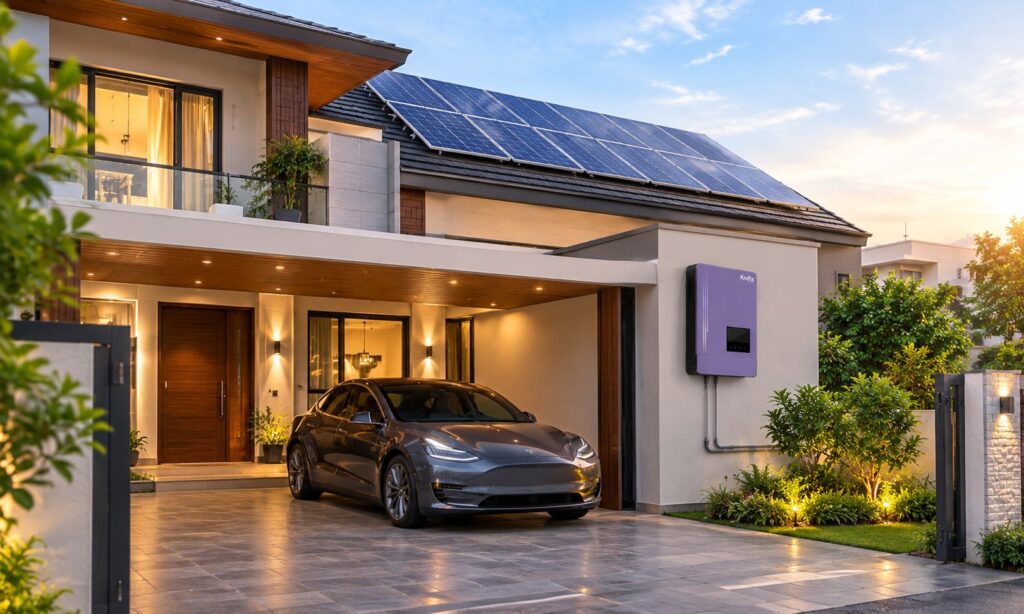
Best Batteryless Solar Inverters in Pakistan
Pakistani households are asking the same question: do I actually need a battery to go solar? The short answer is no not anymore. A new generation of hybrid inverters is built to run comfortably without one, feeding your home straight off sunlight during the day and pulling from the grid the moment clouds roll in. This guide walks through how batteryless solar actually works, which models are worth shortlisting, and the one configuration mistake that trips up almost every first-time buyer.
What "Batteryless" Really Means
A batteryless hybrid inverter isn’t a stripped-down or budget version of a normal hybrid unit it’s the same hardware, just running in a different mode.
Batteryless inverters is not different than other’s inverters it is the same hardware ,it is just running on different mode .A solar panels which helps in producing DC electricity then inverters directly supply in your home appliances in that case electricity will not store in battery .
If the solar panels are generating less power due to cloudy weather or higher electricity demand, the inverter automatically draws electricity from the grid (WAPDA) to meet the shortfall.Since no battery is required, the overall installation cost is significantly lower.Maintenance costs are also reduced because there is no battery that requires regular upkeep, monitoring, or replacement.
As soon as the solar system is installed, you can start reducing your monthly electricity bills through solar energy savings.
Popular Batteryless Models Worth Considering
KNox Krypton Eco 4000 (3kW output / 4000W PV input)
This is the one you get when you get into a 2 or 3 roomed house with fans, LED lighting, fridge and TV. It’s 24VDC so panel wiring remains simple, and it will grid feed any excess electricity it produces that isn’t used, so it won’t be wasted. It is not comfortable with inverter ACs, but is a good basic start for loads in the daytime.
KNOX Krypton Eco 5000 (4.2kW output / 5000W PV input)
A step up in headroom for the same 24VDC platform. This model is popular with households that want a bit more buffer for kitchen appliances or a second fan load without needing to jump straight to a 6kW unit. Like the Eco 4000, it manages dual outputs cleanly, which matters if you want to split “solar-supported” circuits from your heavy-load circuits.
KNOX Krypton 6000 & 6500 (6kW–6.5kW)
These are the powerhouses of the battery-free group, and it’s not surprising that they are featured in so many installer recommendations. The PV input voltage range is large, typically 90V – 450V DC, making installers more flexible in the number of PV modules they can string in series, thus reducing wiring costs. The built-in smart load management function controls solar PV generation and the instantaneous use of electrical equipment to prevent the system from being overloaded when the big electric motor is running.
KNOX Krypton 9000 & 9055 (6.2kW–6.5kW output / 9000W PV input)
The higher-capacity option for bigger homes or homes running one to two inverter ACs. Dual MPPT tracking lets the inverter pull maximum efficiency from two separate panel strings useful if your roof has panels facing different directions. The HMI touch screen and configurable RGB status lighting are mostly quality-of-life additions, but the real draw is the higher PV wattage headroom for growing loads. If you’re weighing this against a battery-backed version of the same series, it helps to look at side-by-side Krypton series specifications before committing to a size.
How Batteryless Operation Actually Works
Once you strip away the marketing language, batteryless hybrid mode comes down to three behaviors:
Direct solar power.
During strong sunlight hours, DC electricity from your panels is converted and sent straight to your appliances air conditioners, fans, lights, refrigerators without ever touching a storage stage.
Grid sharing (SUB mode).
The moment solar generation dips, whether from cloud cover or the sun moving lower in the sky, the inverter blends in grid power automatically. Your appliances never notice the switch; there’s no flicker or restart.
Load constraints to keep in mind.
Appliances with high starting torque traditional water pumps, non-inverter motors, older compressors aren’t ideal candidates for pure batteryless operation. Without a battery buffer to absorb the initial power spike, a momentary dip in solar output during that spike can trip the inverter’s protection circuit. If you’re running this kind of load, it’s worth discussing a small buffer battery with your installer rather than going fully batteryless.
The Setting Mistake That Causes "Fault 9"
This is the part most DIY installers get wrong, and it’s worth repeating clearly: if you’re running a Knox hybrid inverter without a battery, the charger priority must be set to SNU (Solar and Utility). Leaving it on a battery-first priority like CSO or OSO tells the inverter’s firmware to keep searching for a battery bank that isn’t there. That mismatch is exactly what triggers the dreaded Fault 9 error or intermittent shutdowns.
The good news is that newer firmware releases handle this automatically the inverter detects the absence of battery communication and adjusts on its own. But if you’re working with an older unit or a secondhand install, checking (and correcting) the charger priority setting yourself can save a frustrating call to support. It’s a two-minute fix once you know where to look, and it’s covered in more depth in most inverter configuration and troubleshooting resources if you want the full menu walkthrough.
Battery vs. Batteryless Which One Fits Your Home?
There’s no universally “better” option here it depends on your load profile and your tolerance for grid dependency at night. If your household is mostly active during the day (offices, shops, homes with someone working from home) and your main goal is cutting the electricity bill, batteryless makes financial sense: lower upfront cost, less maintenance, no battery replacement cycle every few years. If load shedding at night is your bigger pain point, a battery-backed hybrid system is still the right call, even at the higher initial cost.
Conclusion
Batteryless solar has matured from a niche configuration into a genuinely practical option for a large share of Pakistani households, particularly with wide PV input ranges and smart load balancing now standard across mid-range and high-capacity models. Before you buy, match the inverter’s kW rating to your actual appliance load not your dream load and get the charger priority setting right from day one. That single setting is the difference between a system that runs invisibly in the background and one that throws errors every time a cloud passes overhead.
If you’re still deciding between a 3kW starter system and a 6kW-plus unit for a growing household, it’s worth getting your rooftop and load requirements assessed before ordering equipment sizing mistakes are far more expensive to fix after installation than before it.