


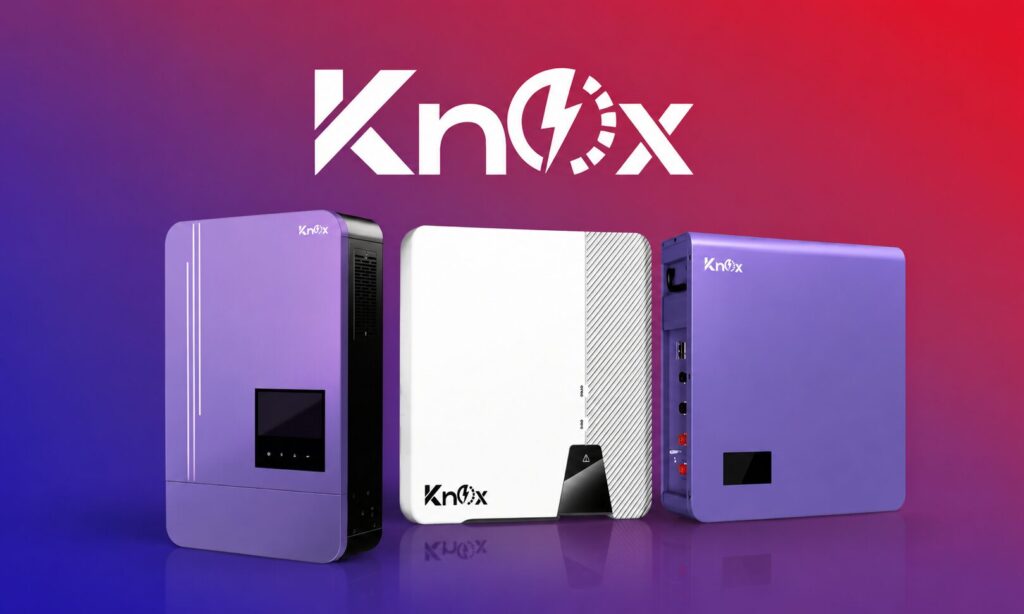
Having a reliable battery is essential for the performance of any solar power system. Poor quality batteries will not last as long and will require replacement in 6-8 months, resulting in further expense and inconvenience.
Batteries should always be replaced with a good-quality battery rather than getting them repeatedly replaced. The right battery will make your solar system more reliable and efficient and ensure a stable power supply for years to come.
Why Battery Choice Makes or Breaks Your Hybrid System
A hybrid inverter is a device that manages three power sources—the solar panels, the national grid, and the battery bank. Switches between them and decides when to charge, discharge, and export. But that’s intelligence as useful as the battery that is fueling it.
If a battery is not designed to allow for rapid charge and rapid discharge, then it will rapidly degrade. One that is not able to resist the summer heat of Pakistan, which is increasingly hitting the cities above 45°C in Multan, Faisalabad, Sukkur, etc., will fail early. The battery is the foundation on which everything else is developed.
Lead-Acid vs. Lithium: The Honest Comparison
Tubular lead acid batteries have been in use for years. These batteries are inexpensive and readily available, but they aren’t as effective in combination with hybrid inverters. They are less efficient than today’s lithium batteries, have a shorter life, and are slower to charge.
Lead-Acid Weaknesses:
- Only 50% usable capacity (Depth of Discharge)
- Lifespan of just 2–4 years under daily cycling
- Needs regular water top-ups
- Struggles in heat above 35°C
- Can’t communicate with modern hybrid inverter BMS systems
LiFePO₄ Lithium Advantages:
- 80–100% usable capacity
- 4,000–6,000+ charge cycles (10+ years of daily use)
- Zero maintenance
- Stable performance from -20°C to +55°C
- Built-in Battery Management System (BMS) for smart, safe operation
For any hybrid inverter system in 2026, LiFePO₄ (Lithium Iron Phosphate) is the only serious choice. The higher upfront cost is recovered quickly — you’d replace a lead-acid battery 3–4 times before a lithium unit even reaches midlife.
Knox Solar’s LiFePO₄ Battery Range
Knox Solar offers a complete range of LiFePO₄ batteries built specifically to pair with their hybrid inverter lineup. Here’s what’s available and who each model suits.
Powerwall Series — Best for Homes & Small Businesses
The Knox Powerwall IP20 Series is wall-mounted, compact, and designed for residential use. Three models cover the full range of home energy needs.
Powerwall 3.1 – IP20 (25.6V / 100AH) A compact, light 28 kg unit suitable for use in moderate load shedding apartment and small homes. Scalable up to 20kWh. Features overcharge, overcurrent and thermal auto shut-off protection. Works well in: 1-3 bedroom homes, apartments.
Powerwall 6.0 – IP20 (51.2V / 100AH) Knox’ most popular residential battery. The 6 kWh LiFePO₄ has over 16 years of daily cycling at 80% DoD. Advanced BMS provides balanced charge of every cell for the best life and enhanced thermal stability ensures safe operation in the hottest summer weather. Ideal for: 3-5 bedroom homes with a requirement for 8-12 hours of backup.
Powerwall 6.11 – IP20 (51.2V / 100AH) The most refined Powerwall model, with 95% round-trip efficiency and a modular design for easy expansion. Temperature-controlled operation makes it the best choice for environments with extreme heat variation. Best for: Homeowners who want scalable, high-efficiency storage.
Rackwall Series — Best for Large Homes, Businesses & Commercial
The Knox RackMount Series steps up capacity for bigger loads. These units can be wall-mounted or rack-mounted and are designed for commercial-grade reliability.
Rackwall 8.0 – (51.2V / 150AH) An 8 kWh mid-range module ideal for large homes and small businesses. Pairs natively with Knox’s Krypton hybrid inverter series. Best for: Large homes, SMEs, small offices.
Rackwall 10.5 – (51.2V / 200AH) At 10.5 kWh, this is Knox’s most versatile commercial battery. Built-in RS-485 / CAN communication ports enable real-time monitoring of voltage, temperature, current, and state-of-charge. Deep discharge recovery and advanced LiFePO₄ technology make it ideal for high-demand applications. Best for: Businesses, clinics, schools, large residential properties.
Rackwall 15 – (51.2V / 280AH) Knox’s highest-capacity battery at 15 kWh, with ≥95% round-trip efficiency and a low self-discharge rate. Optional Wi-Fi / Ethernet modules enable remote access and data logging — essential for commercial properties that need performance visibility. Multiple units can be deployed in parallel for 30–45 kWh systems. Best for: Factories, hospitals, commercial buildings, large farms.
Explore the complete Residential Energy Storage range on the Knox website.
Battery-to-Inverter Pairing Guide
Knox batteries and inverters are designed as an integrated ecosystem. Here’s how to match them:
| Your System Size | Recommended Inverter | Recommended Battery |
|---|---|---|
| Small home (1–3 beds) | Zynex Series – 1–8 kW Single Phase | Powerwall 3.1 or 6.0 |
| Medium–large home | Krypton 12002–15002 – Hybrid with Grid Feeding | Powerwall 6.11 or Rackwall 10.5 |
| Large home / business | Krypton Series | Rackwall 10.5 or Rackwall 15 |
| Commercial / industrial | Xenon Three-Phase Series | Rackwall 15 (multiple units) |
The Krypton and Xenon inverters communicate via RS485 and 4G, which maps directly to the RS-485 / CAN ports in the Rackwall series — enabling full real-time monitoring without any additional hardware.
4 Things to Check Before You Buy
1. Capacity (kWh) — Estimate your daily load during load-shedding. Running fans, lights, a fridge, and a TV (~600W) for 10 hours requires roughly 6 kWh. Scale up for air conditioning or commercial equipment.
2. Voltage Match — Knox Powerwalls run at 51.2V (or 25.6V for the 3.1). Knox Rackwalls run at 51.2V. All are compatible with Knox’s Zynex, Krypton, and Xenon inverter series.
3. Cycle Life vs. Cost — Don’t just compare price tags. The Powerwall 6.0’s 6,000+ cycles at 80% DoD means a single unit outlasts four or five lead-acid replacements. Calculate total cost of ownership over 10 years, not just day one.
4. BMS & Communication — Every Knox battery includes a built-in BMS that protects against overcharge, over-discharge, overcurrent, short circuits, and temperature extremes. RS-485 / CAN communication means your inverter and battery work as one intelligent system, not two separate devices.
Quick Comparison at a Glance
| Model | Capacity | Voltage | Standout Feature | Best For |
|---|---|---|---|---|
| Powerwall 3.1 | ~2.56 kWh | 25.6V | Lightweight, scalable | Apartments, small homes |
| Powerwall 6.0 | 6 kWh | 51.2V | 6,000+ cycles | Medium homes |
| Powerwall 6.11 | ~6.1 kWh | 51.2V | 95% efficiency | Scalable setups |
| Rackwall 8.0 | 8 kWh | 51.2V | Mid-range commercial | Large homes, SMEs |
| Rackwall 10.5 | 10.5 kWh | 51.2V | RS-485 / CAN monitoring | Businesses, clinics |
| Rackwall 15 | 15 kWh | 51.2V | ≥95% efficiency, remote access | Commercial & industrial |
Final Thoughts
There’s one battery technology that works for hybrid inverters in Pakistan in 2026: LiFePO₄ lithium. And there’s one local brand that has built a complete, integrated ecosystem around it: Knox Solar.
- Small home or apartment? → Powerwall 6.0
- Medium-to-large home? → Rackwall 10.5
- Commercial or industrial? → Rackwall 15
- Not sure which inverter to pair it with? → Browse the full Knox Products Page or contact the team directly.
Stop losing money on batteries that need replacing every two years. Switch to a Knox LiFePO₄ system and get 10+ years of reliable, low-maintenance backup power — starting today.